-cropped.svg)
.svg)

Manta Health's Agentic AI Appeals pillar captures every denial, organizes the supporting documentation, and puts Manta's operations team to work on the appeal, so your practice recovers revenue that would otherwise be written off.
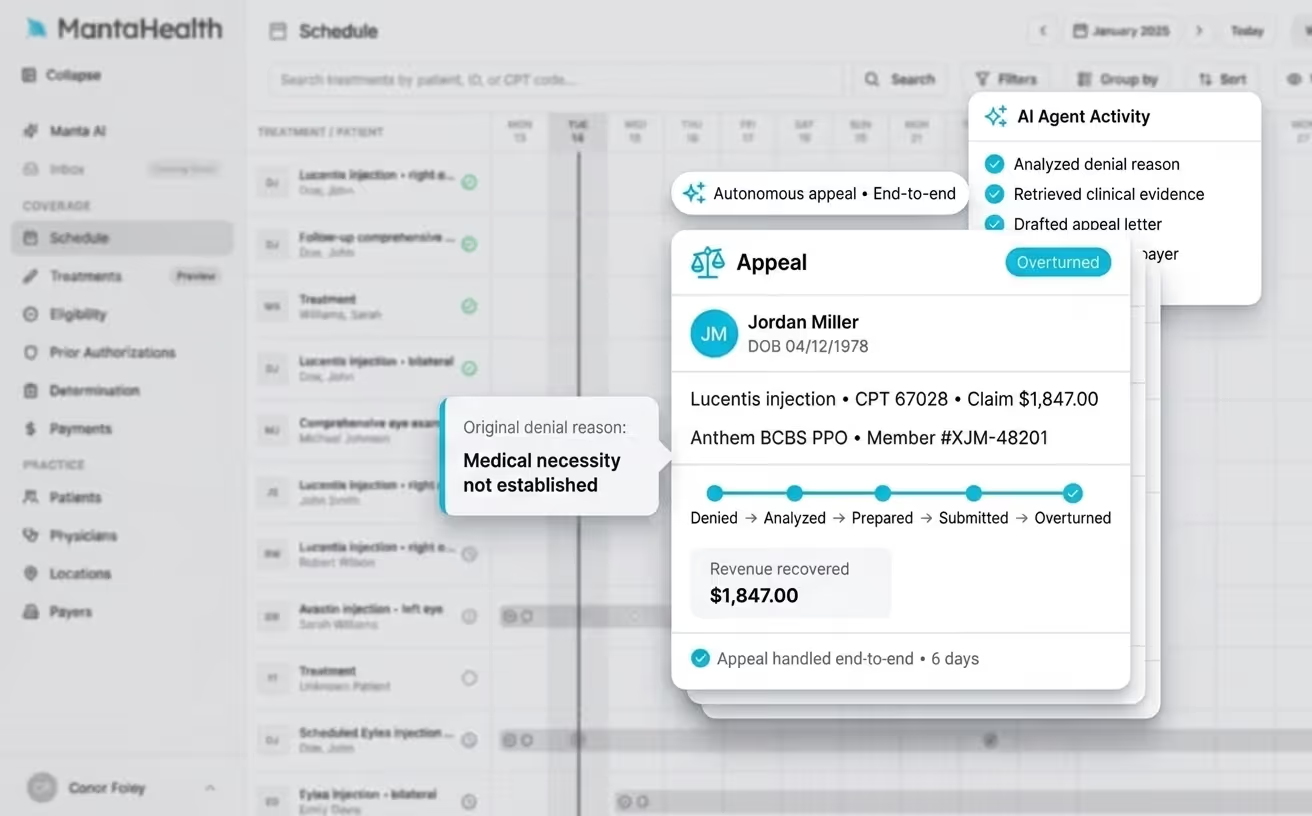
A prior authorization appeal is a formal request to a payer to reconsider a denial decision. Appeals require clinical documentation, payer-specific formatting, and follow-up across multiple channels. In most practices the appeal workflow is manual, time-consuming, and deprioritized. Not because the denial is indefensible, but because the workflow does not scale at volume.
Manta combines the organizational infrastructure of Manta with a dedicated operations team that manages appeal preparation and submission on your behalf, so every denial gets a response and recoverable revenue does not get written off. Learn more about Prior Authorization →
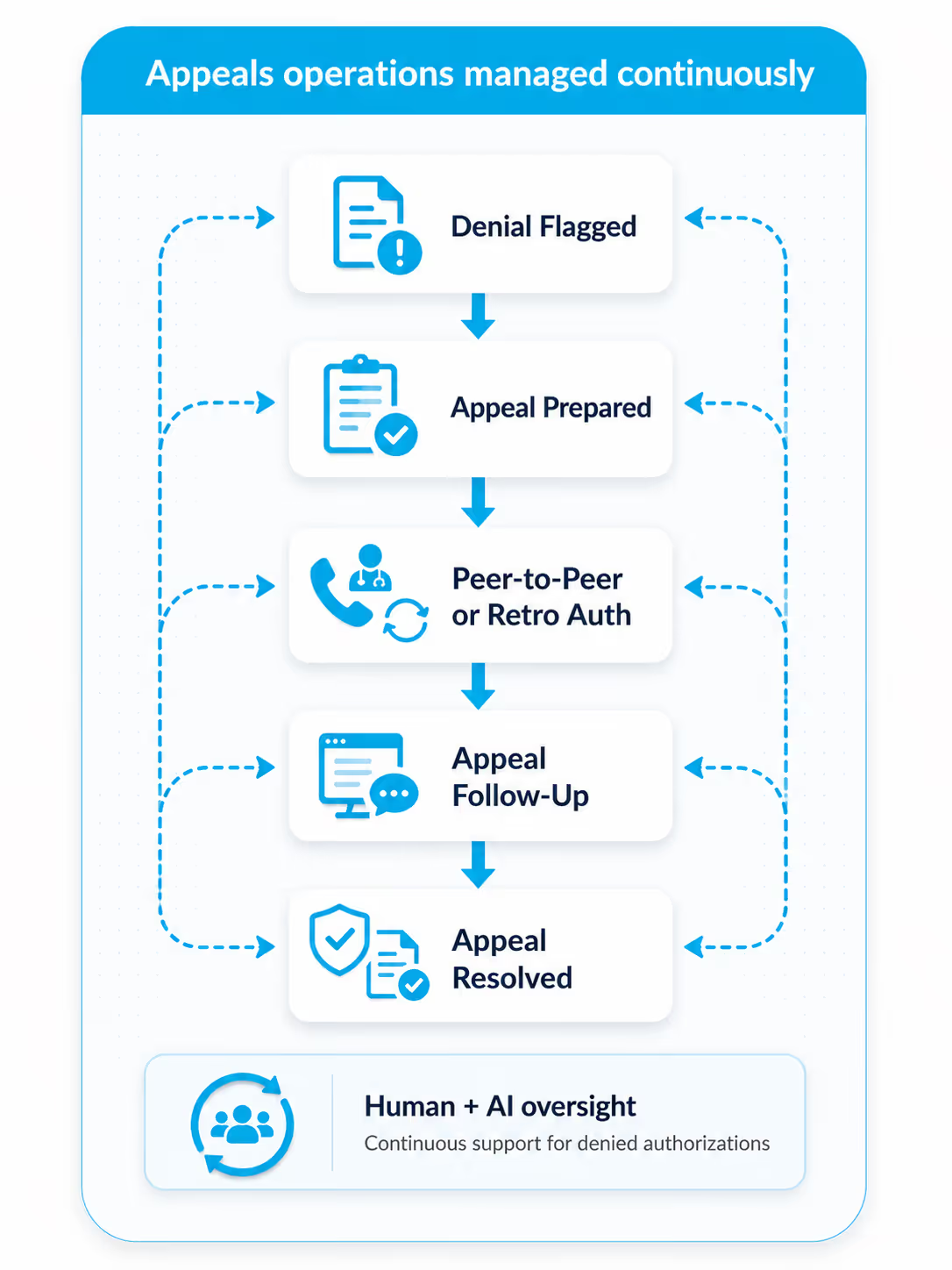
Manta's operations team does not wait for your staff to flag a denial. When a PA is marked denied in Manta, the team moves to prepare and submit the appeal using the documentation already structured in the platform.
The operations team handles:
This is the same team that manages PA submission. They know the payer requirements, the submission channels, and the clinical context for your procedures. Appeals are a continuation of that work, not a separate escalation.
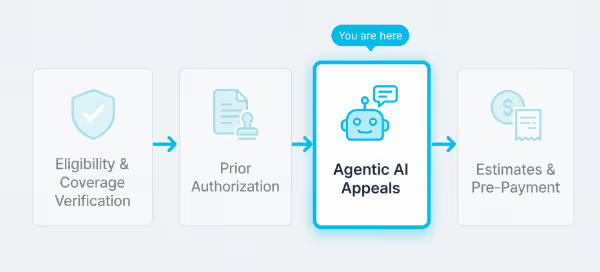
Appeals sits at the end of the Coverage Intelligence workflow, after eligibility verification and prior authorization. Where upstream prevention reduces how many denials occur, Appeals is the structured response when a denial does happen. The documentation, payer context, and clinical detail already captured in Manta are what make a fast, well-prepared appeal possible.
A denial does not end the process. Manta's operations team moves to prepare and submit the appeal using the evidence already organized in the platform, so your staff is not pulled back into a workflow they thought was complete.

Manta verifies active coverage, interprets benefit details by treatment and CPT code, and confirms whether prior authorization is required before care is delivered.

Eligibility determines whether authorization is required. Manta prepares and submits documentation automatically for any payer.

Verified benefit data feeds directly into patient cost estimates and pre-payment collection before treatment.
A prior authorization appeal is a formal request to a payer to reconsider a denial decision. It requires clinical documentation supporting medical necessity, adherence to payer-specific appeal procedures, and submission through the payer's designated channel. Most practices do not appeal systematically because the workflow is manual and does not scale.
When a PA is denied, Manta captures the denial reason, attaches the denial letter, and records the full payer response. Manta's operations team reviews the denial and prepares the appeal using the clinical documentation and payer requirements already structured in the platform. The appeal is submitted through the appropriate channel and tracked through to resolution.
Denials are recorded in Manta when the payer response is received through the Availity integration or when the Manta operations team updates the PA status based on a fax or phone response. The denial reason, payer response, and supporting documentation are captured on the PA record at the point of recording.
Manta's operations team handles first-level standard appeals, peer-to-peer review coordination, retro authorization requests, and claim-level appeals. Appeal preparation and submission use the same payer portal, fax, and phone channels as PA submission.
Appeal activity is tracked on the underlying PA record in Manta. The denial reason, supporting documentation, status history, and outcome are all visible on the PA detail page. When an appeal succeeds, the PA status transitions to approved and the authorization details are updated.
Appeals is the final step in the Coverage Intelligence workflow. Accurate eligibility verification and precise prior authorization preparation upstream reduce the number of denials that reach the appeal stage. When a denial does occur, the documentation and payer context already structured in Manta supports faster appeal preparation than a manual workflow.
At Rocky Mountain Eye Center, net denial rate fell from 3% to 0.5% after Manta deployment, with the residual reduction driven by appeal work on denied authorizations. Combined upstream prevention through Coverage Intelligence and appeal follow-through on denials that did occur produced that outcome together.
Say goodbye to faxes, lengthy phone calls, and tedious RCM admin.
