-cropped.svg)
.svg)

Manta Health's Prior Authorization pillar automates PA determination, preparation, and submission across payers, combining AI-driven workflows with a dedicated payer operations team so your staff spends time on patients, not on hold with payers.
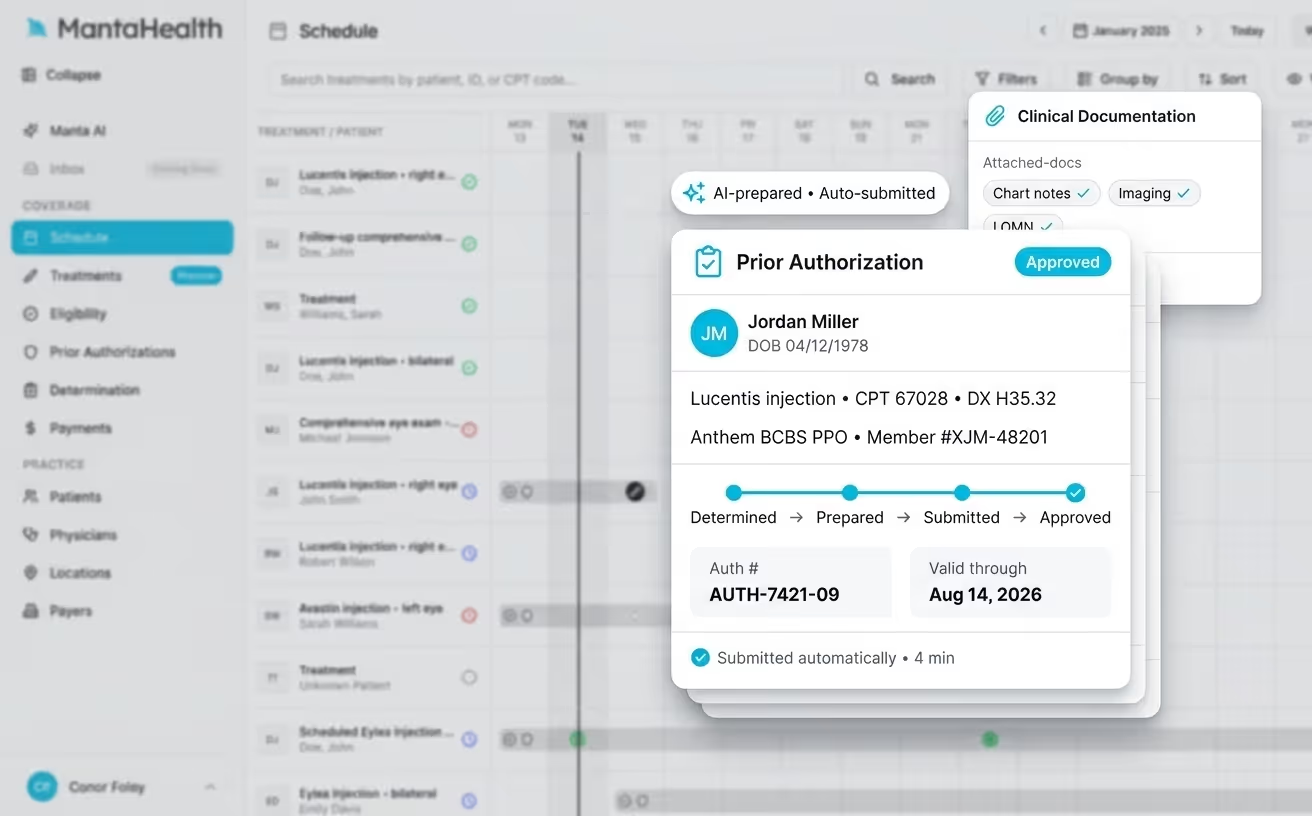
Prior authorization is the process of obtaining payer approval before certain services are delivered. It requires clinical documentation, justification of medical necessity, and adherence to payer-specific requirements that vary by procedure, plan, and patient context. For specialty procedural practices, prior authorization is one of the most time-consuming and revenue-sensitive administrative workflows in the revenue cycle.
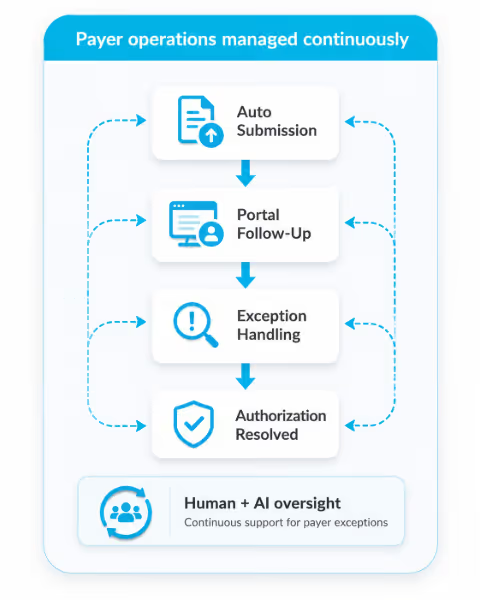
Manta combines AI-driven automation with a dedicated payer operations team that works alongside your practice continuously, not just when exceptions arise.
The operations team manages submission for payers and channels not yet handled by direct automation, coordinates HMO authorizations that require ordering-provider initiation, handles 2FA challenges and portal exceptions, and steps in when clinical documentation is incomplete, a procedure is added close to the appointment date, or a payer is experiencing processing delays.
This means your staff is not pulled back into the PA workflow when things deviate from the standard path. Manta absorbs that complexity. At Rocky Mountain Eye Center, a practice that previously required five PA specialists to manage the same volume now operates with one, with more visibility and control than before.
That is not a headcount reduction story. A single specialist using Manta has time for the exceptions that genuinely require clinical judgment, because the routine submissions, status checks, and documentation assembly run automatically. The job gets better, not smaller.
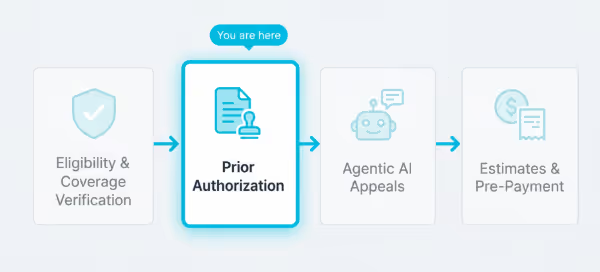
Prior authorization sits between eligibility verification and patient financial clearance in the Coverage Intelligence workflow. The eligibility check confirms whether authorization is required and for which CPT codes. The PA workflow secures that authorization. Once approved, patient estimates and pre-payment collection proceed with confidence.
A PA denial does not end the process. It triggers the Agentic AI Appeals workflow automatically, so every denial gets a response without adding to your team's workload.

Manta verifies active coverage, interprets benefit details by treatment and CPT code, and confirms whether prior authorization is required before care is delivered.

Every denial auto-appealed immediately upon receipt. Payer-specific AI drives a 90%+ overturn rate.

Verified benefit data feeds directly into patient cost estimates and pre-payment collection before treatment.
Prior authorization is the process of obtaining payer approval before certain services are delivered. Payers require it to confirm medical necessity and adherence to plan-specific coverage rules before committing to reimbursement. Requirements vary by procedure, payer, and plan, and change frequently without notice to providers.
Manta runs PA determination against a centralized rules database keyed by CPT code, payer, and plan. Each rule carries an effective date so the system always applies the rule that was active at the time of the determination. The decision is written to an immutable audit record capturing the rule version, decision date, and determining user, making it defensible if a payer disputes it later. Determination takes under 10 seconds.
Manta's payer operations team maintains the rules database with effective-dated updates as payer policies change. Every rule update carries mandatory documentation so the history of any determination can be traced. This replaces the manual process of tracking payer policy changes across portals, fax communications, and provider bulletins.
Manta submits PAs via payer portals, fax, and phone. Payer coverage is strongest for ophthalmology and ambulatory surgery center workflows, with radiology and additional specialties actively being deployed. Manta's payer operations team manages submission for payers and channels where direct automation is not yet available.
Every denial routes automatically to Manta's Agentic AI Appeals workflow. The appeal is filed without manual intervention from your team. Payer-specific AI trained on payer rules and practice history prepares the appeal documentation and manages the response process.
HMO plans require the ordering provider to initiate the authorization directly. This is a payer requirement that applies regardless of which platform is used. For HMO authorizations, Manta's operations team coordinates with your ordering providers to ensure the request is initiated correctly and tracked through to resolution.
At Rocky Mountain Eye Center, average PA approval time dropped from 11 to 12 days to 2.8 days, a 75% reduction. PA determination, the step that identifies whether authorization is required, runs in under 10 seconds compared to 20 to 30 minutes manually, with a 93% reduction in payer phone calls reported by Northstar Medical Management.
Manta's PA workflows are most mature for ophthalmology retina and injection procedures and ambulatory surgery center pre-certification workflows. The platform is actively deployed in radiology and is suited for any specialty procedural practice with high prior authorization volume, including gastroenterology, urology, and orthopedics.
Say goodbye to faxes, lengthy phone calls, and tedious RCM admin.
