-cropped.svg)
.svg)
.jpeg)
- Administrative Black Hole
- The Evolving Landscape of Eylea Prior Auth Hurdles
- The Financial Impact: When Delays Become Denials
- Final Thoughts
Executive Summary
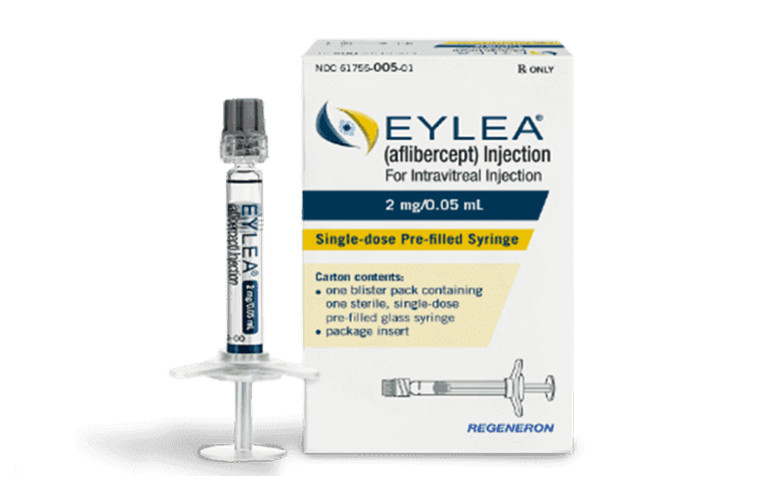
Eylea prior authorization is among the most administratively complex PA workflows in ophthalmology — driven by step therapy requirements, frequent payer rule changes, and the added complexity of Eylea HD and biosimilar policies. The median staff time to prepare and submit a single Eylea PA is 100 minutes, not including appeals and status follow-up. Despite a 96% ultimate approval rate, first-submission denials are common — triggered by documentation gaps, step therapy compliance issues, and coding mismatches. Practices that automate PA determination and validation before submission eliminate the majority of this burden without adding staff.
For retina specialists, Eylea is an essential clinical tool in the treatment of wet AMD and diabetic macular edema. For practice staff, the prior authorization process that accompanies it is one of the most administratively demanding workflows in ophthalmology — and one of the most preventable sources of revenue loss and staff burnout in a high-volume injection practice.
The Administrative Black Hole
While Eylea injections may take just a few minutes, the PA process can drag on for hours, even for a single patient. Staff members find themselves trapped in a cycle of manual, repetitive tasks: endless phone calls, long hold times, and navigating different payer portals. The fax machine, a symbol of this outdated system, whirs tirelessly, spitting out forms that are often incomplete or outdated. This administrative burden leads directly to staff burnout, increased turnover, and reduced morale. Imagine this: According to a 2023 AMA prior authorization physician survey, the PA process for a single anti-VEGF treatment requires a median of 100 minutes of staff time. With dozens of patients a week, that’s a full-time job spent solely on bureaucracy, not patient care.
The Evolving Landscape of Eylea Prior Auth Hurdles
Even after all that effort, the challenges keep evolving.
- The "Step Therapy" Trap: Many insurers now require "step therapy," which is a "fail first" approach. This forces practices to prove a patient has failed on a lower-cost, off-label drug—like Avastin—before Eylea is approved. This creates a difficult ethical and clinical dilemma, as a doctor's professional judgment is undermined by a payer's cost-saving policy.
- The Eylea HD and Biosimilar Wildcard: The introduction of Eylea HD and biosimilars has added another layer of complexity. Payers are rolling out new, often confusing, policies for these newer drugs, forcing practices to constantly stay on top of a fragmented and rapidly changing set of rules.
The Financial Impact: When Delays Become Denials
All of this administrative inefficiency has a direct financial impact on your practice. While a stunning 96% of Eylea PAs are eventually approved, the process is far from perfect. First-submission denials are common, often triggered by a single error or a piece of missing documentation. When a PA is denied, it forces staff to engage in a new, even more labor-intensive process: the appeal.
Even with an ultimate approval, the delays are a major issue. The same AMA survey found that 60% of PA approvals resulted in a delay of patient care, which is a significant concern for time-sensitive retinal conditions where every day counts.
Final Thoughts
Eylea prior authorization is not going to get simpler. Step therapy requirements are expanding. Biosimilar policies are multiplying. Payer rules are changing faster than any manual process can track.
The practices that have solved this problem didn't do it by working harder or adding staff. They did it by treating Eylea PA as a coverage intelligence problem — one that requires real-time, payer-specific interpretation at the point of scheduling, not reactive follow-up after a denial lands.
When authorization requirements, step therapy status, and documentation criteria are validated before submission rather than discovered after denial, the 100-minute PA workflow compresses dramatically. First-pass approval rates improve. Appeals become the exception rather than the rule. And staff time shifts from bureaucratic follow-up to patient-facing work.
For a real-world example of what that looks like in an ophthalmology practice, see how Rocky Mountain Eye Center eliminated 90% of PA denials and repurposed five full-time staff using Coverage Intelligence.
See how Manta Health handles Eylea and anti-VEGF prior authorization inside your existing workflow → Book a Demo