-cropped.svg)
.svg)


- The Challenge
- The Solution
- The Results
- Conclusion
At a Glance
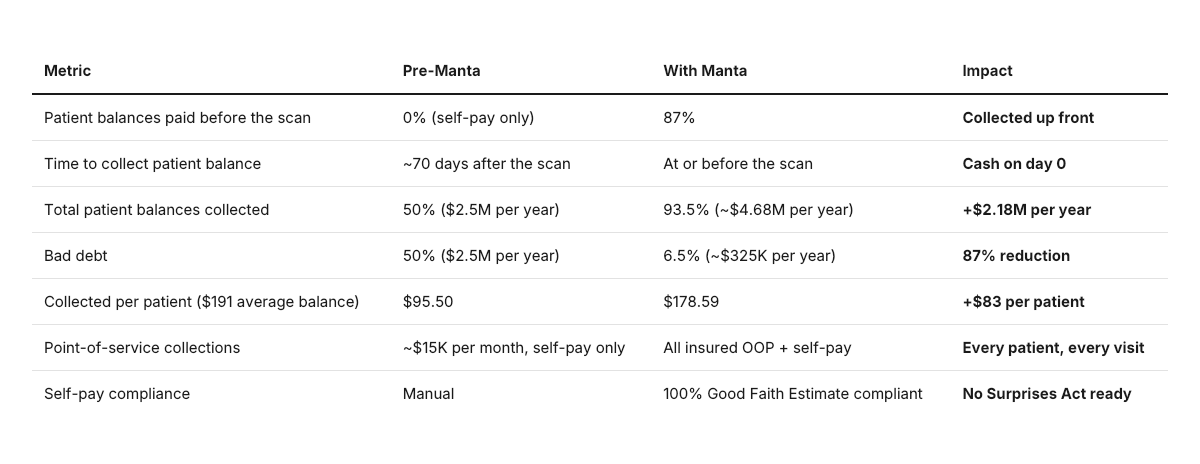
87% of patient balances paid before the scan · 6.5% bad debt, down from 50% · 0 days to collect, down from 70 · 100% of self-pay collected under Good Faith Estimate rules
Source: Internal performance data provided by ProHealth Advanced Imaging, [pilot period].
The Challenge: Half of Every Patient Dollar Walked Out the Door
ProHealth Advanced Imaging, an 8-facility radiology group in Southern California, was leaving $2.5M in patient balances uncollected every year. Like many imaging groups, ProHealth wasn't losing revenue because patients refused to pay. It was losing it because it asked them too late.
Billing After the Fact
- No upfront collection for insured patients: Copays, deductibles and coinsurance were billed only after the claim adjudicated. Nothing was collected at check-in.
- Self-pay only at the front desk: Point-of-service collections were limited to cash-pay patients, about $15K per month across all 8 sites.
- No way to quote the full cost: Without a reliable out-of-pocket estimate, front desk staff had nothing concrete to collect against and no confidence to ask.
The Cost of Chasing Patients
ProHealth's patient responsibility totaled roughly $5M per year, about 26,000 patient balances at an average of $191 each. Collecting it after the scan created two compounding losses:
- Slow cash: The balances that did get paid arrived an average of 70 days after the procedure.
- Bad debt: 50% of patient bills, about $2.5M per year, were never paid at all.
The root cause wasn't unwillingness. A bill that shows up two months after a scan is a surprise, and once patients leave the building, most simply forget.
The Solution: An EOB Before the Scan
ProHealth partnered with Manta Health to deploy Patient Estimates and Payments across all 8 facilities. The goal was simple: tell every patient exactly what they owe before the scan, and make it easy to pay.
Key Features Deployed
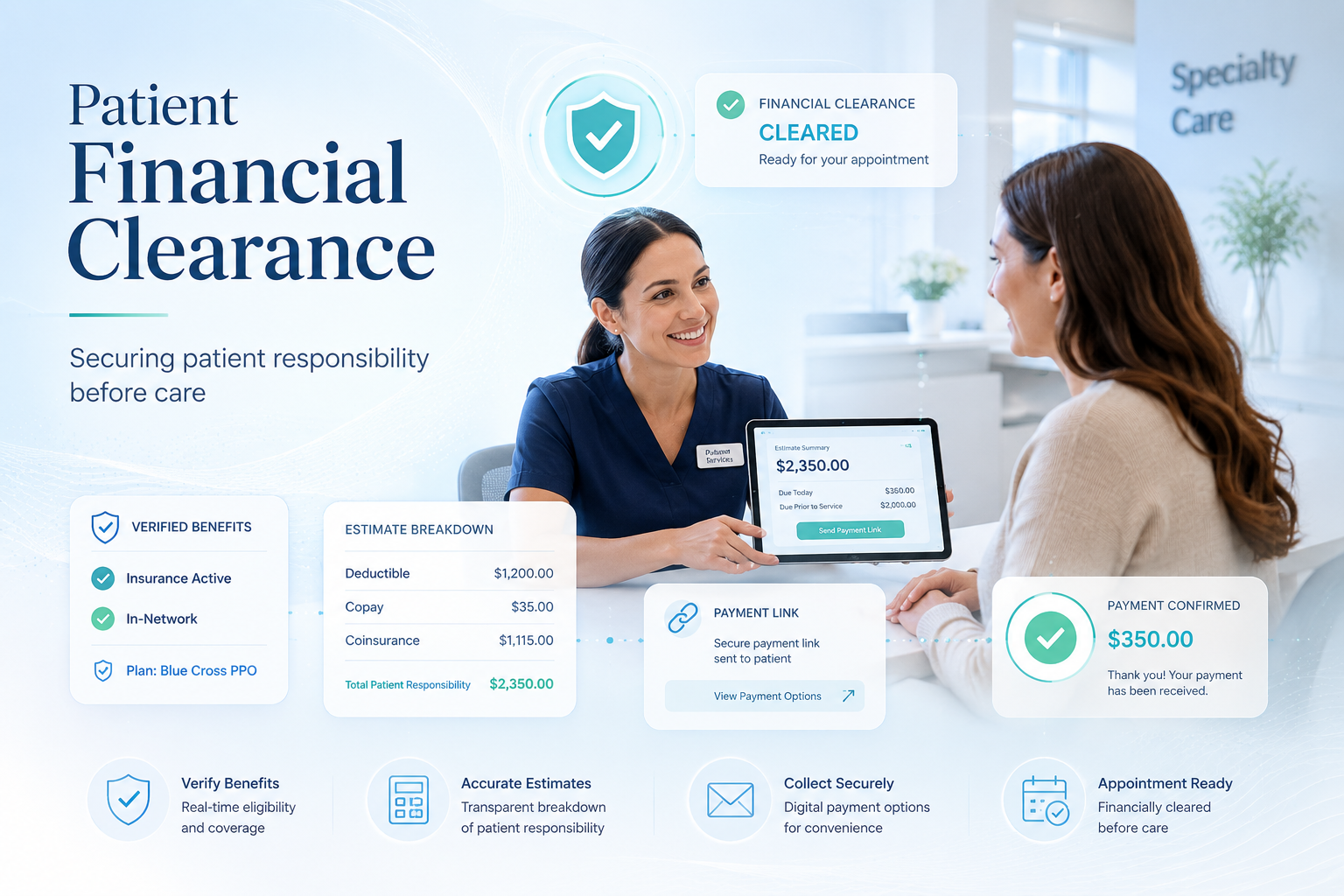
- Full out-of-pocket estimates for insured patients: Manta generates a complete estimate before the procedure, combining deductible, copay and coinsurance. It works like an EOB, delivered before the scan instead of weeks after it.
- Transparent math: Every estimate shows how the number was calculated, from the patient's plan benefits to the contracted rate. Patients understand the amount, and front desk staff can explain it with confidence.
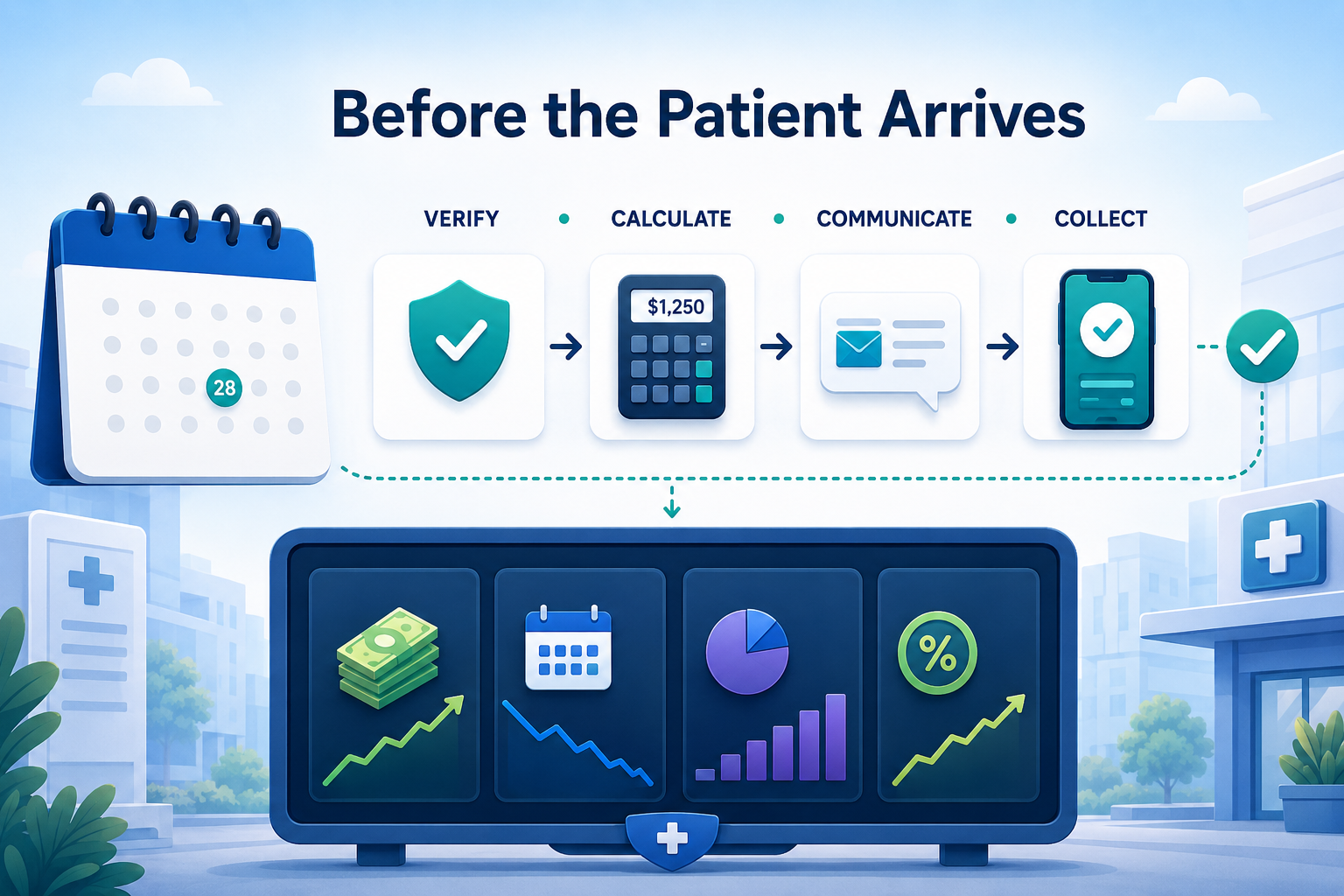
- Pre-visit payment by text: Patients receive their estimate and a payment link by text before their appointment, so they can pay ahead from their phone.
- Good Faith Estimates for self-pay patients: Cash-pay patients receive a compliant Good Faith Estimate automatically, meeting No Surprises Act requirements on every visit.
- Every way patients pay: ACH, FSA/HSA, debit, credit and cash are all accepted, so payment method is never a reason to delay.
The Results: 87% Collected Before the Scan
With Manta Health, ProHealth went from collecting nothing upfront from insured patients to collecting 87% of patient balances before the scan.
How Patients Pay Now
- 30% pay before they arrive, by text, from the estimate and payment link sent ahead of the appointment.
- 57% pay at the front desk, at check-in, with a clear estimate in hand.
- 13% are billed after the claim, and about half of those are collected, with follow-up handled at ProHealth's discretion.
- 100% of self-pay patients are collected with a compliant Good Faith Estimate.
Financial Impact Summary
- Cash up front: On roughly $5M in annual patient responsibility, about $4.35M is now collected at or before the scan. Before Manta, only $2.5M was ever collected, and it took 70 days.
- Days in A/R eliminated for most balances: 87% of patient balances no longer enter A/R at all.
- Bad debt cut by 87%: Uncollected balances fell from 50% ($2.5M) to 6.5% (about $325K) per year. Total collections rose to 93.5%, about $2.18M more per year.
- Less work for billing: Fewer statements, fewer follow-up calls and fewer accounts sent to collections.
On a $191 average balance, ProHealth now collects $178.59 per patient, up from $95.50. That is $83 more per patient, most of it on the day of service.
These results reflect a side-by-side comparison of ProHealth's historical collections data against performance data captured within the Manta Health platform during [pilot period].
Final Thoughts
What ProHealth Learned
- Patients are willing to pay. They just don't like surprises. When patients know the exact amount before their scan, most pay without hesitation. Chasing them after they leave is hard, and most don't refuse; they simply forget.
- Clarity gives the front desk conviction. Showing patients how the estimate was built turns a difficult conversation into a routine one. Staff collect confidently because they can explain every dollar.
- Convenience closes the payment. Accepting ACH, FSA/HSA, debit, credit and cash, and letting patients pay by text before they arrive, removes the last reasons to put off payment.